Beyond Reasonable Drought
As a heavy grey sky hangs tantalisingly above us, both my garden and I are on our knees, gasping for rain. The drought this year has left huge scars across the country, mature trees dropping branches, landscapes in cinders and wildlife crippled. Alongside such devastation in nature, the losses in our own gardens may seem insignificant, but they still smart.
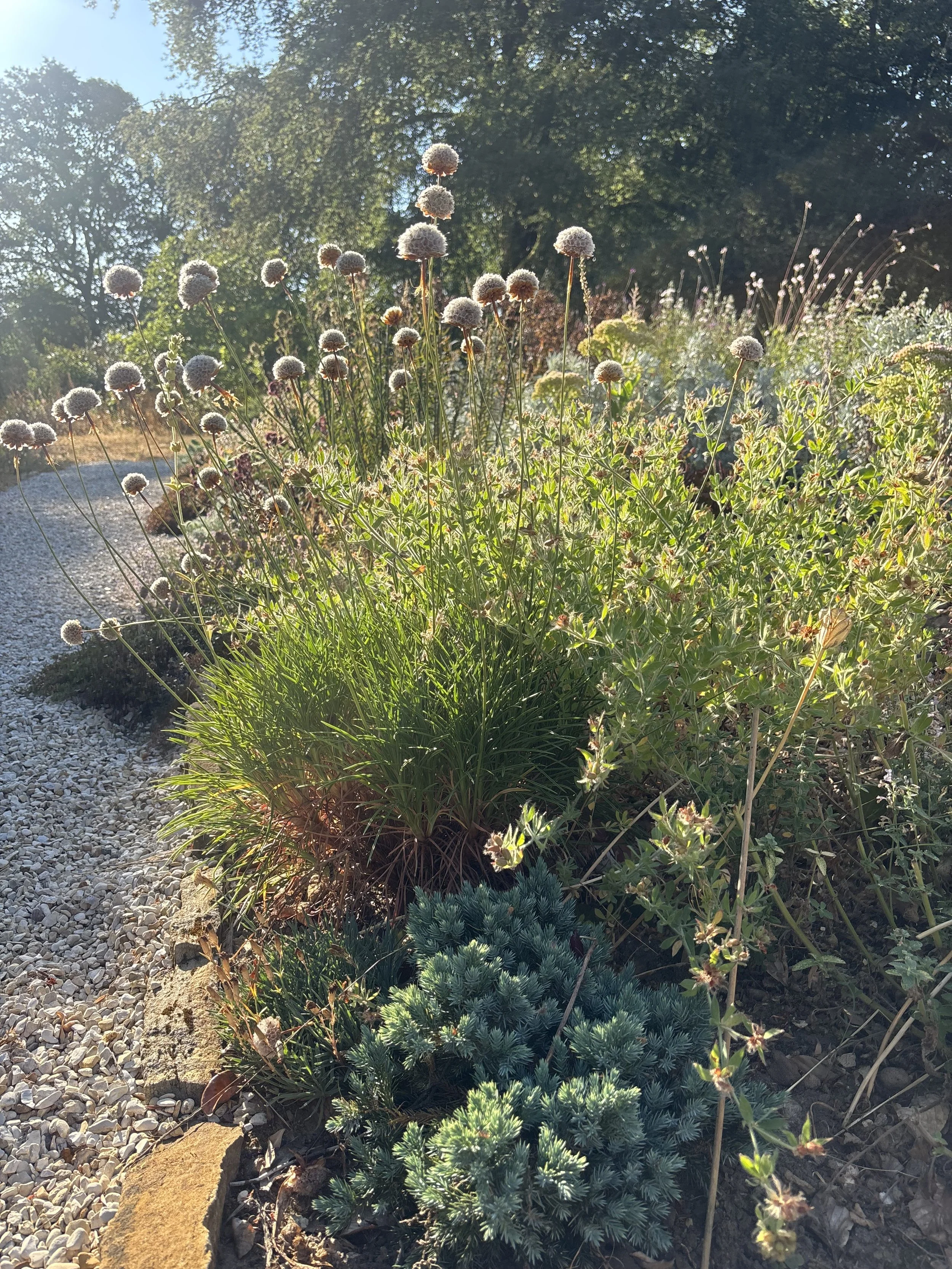
My new ‘Silver Beds’, planted a year ago, unwatered, holding fast but ready for rain.
I work with people in their own back gardens and am fascinated by how elements of the brilliant progress in public drought-tolerant planting and design can be translated to the average domestic garden. It is not so easily done, and whilst sand or aggregate gardens like those at West Dean, Knepp or Serge Hill do seem to have fared well in the drought, my experience is that most people cannot simply pour sand over the garden they have. Not only do aggregate gardens need specific conditions (an open site for example), but they can be complicated to integrate into existing spaces, perhaps achievable in areas of a garden but not over all of it. Gardening is a long and complex chain of diligent work, love and care, passed on from gardener to gardener. Very few people start with a blank canvas as their first garden and are instead faced with a range of mature shrubs, a mix of perennials they find both delightful and dodgy,, a lawn and a good dollop of perennial weeds. For ‘ordinary’ gardeners curating and remaking an existing garden is complex enough; adapting it to drought is even more so. It is unsustainable to suggest the whole country rip out what they have and start from scratch. In the end the methods for coping with drought will vary from garden to garden, from bed to bed, but the gardener’s tool kit will remain the same: creative thinking, curiosity and observation, an ability to pivot and learn from failures, and a thick skin.
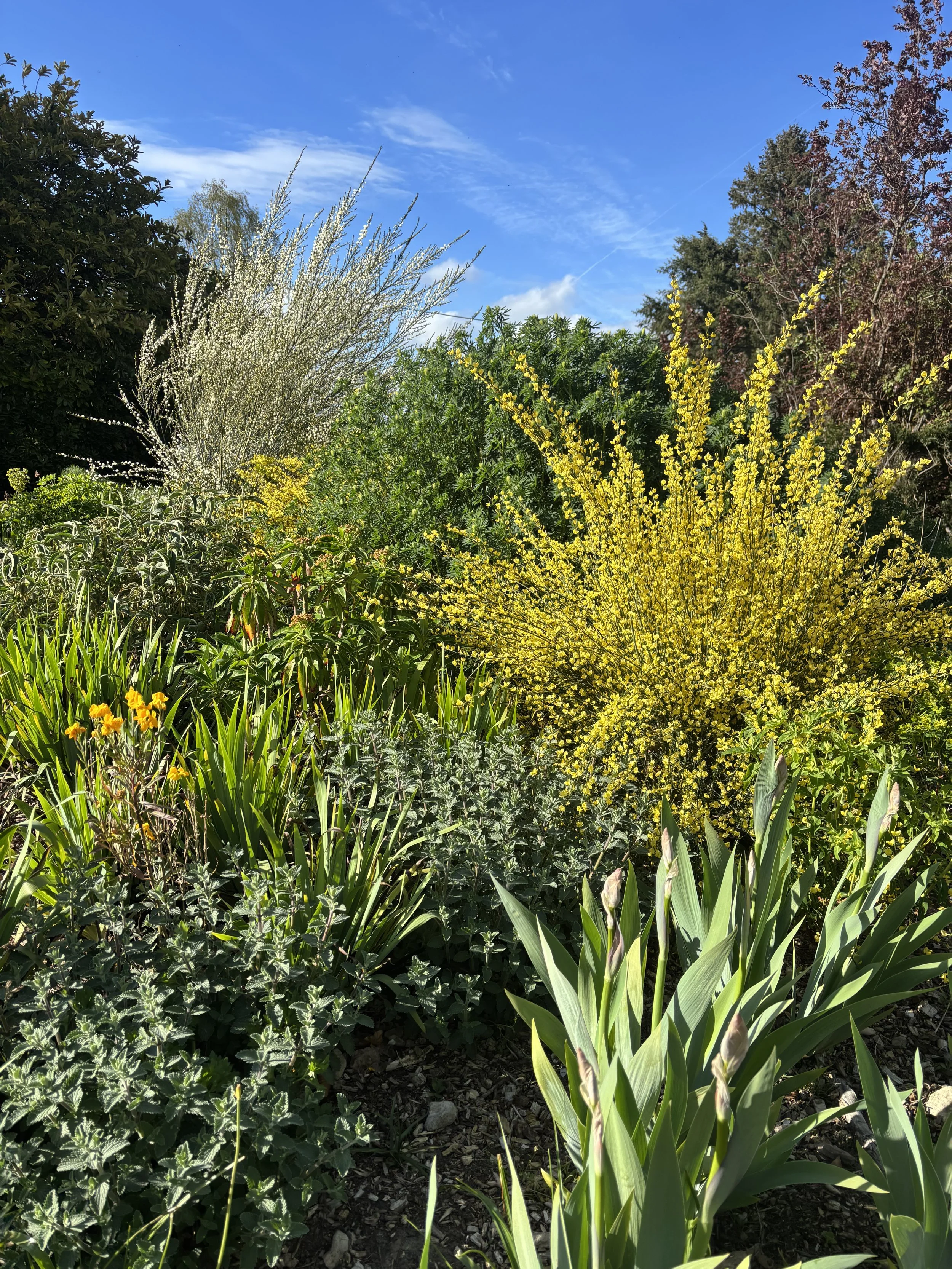
My front bank in April - low maintenance and drought tolerant
In the three years since moving here I’ve mainly used a palette of very drought-tolerant plants. I have mulched some beds here quite heavily, but organic matter washes through my thin sand within a season and singlehandedly mulching large areas of the garden annually is not currently achievable. I’m determined to rework the garden myself and to import as little material as possible, so I’ve set myself the challenge of dry gardening without a mineral mulch and using ground cover plants as an organic, living blanket over the soil. All of these new beds are watered on planting, and individual plants are rescued in their first year, but are otherwise left unwatered. All in all, my dry planting has fared pretty well this year, but where plants have struggled, I have learned clear lessons for the future.
1. Bare ground is baked ground
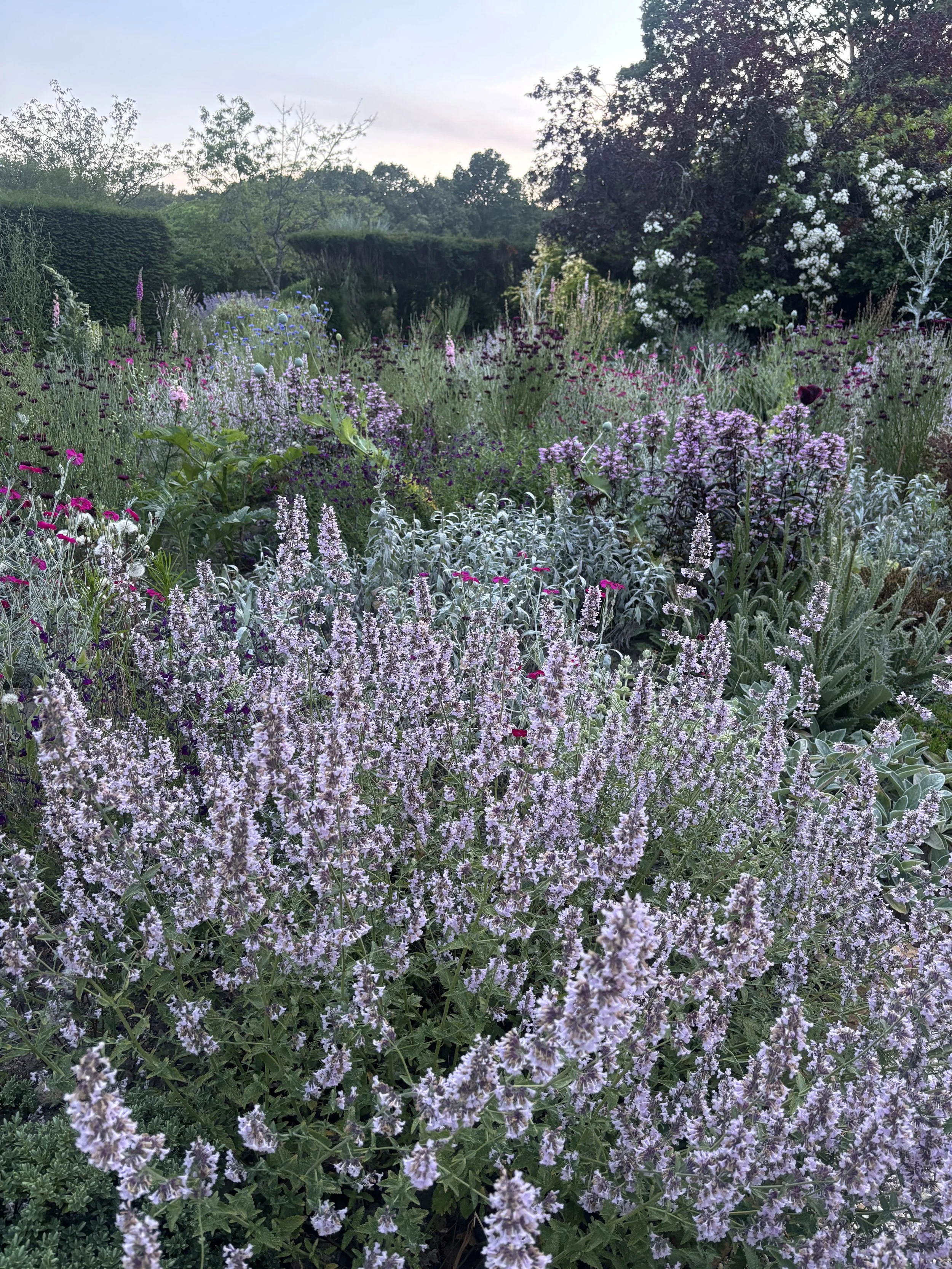
Nepeta ‘Amelia’ in June, covering the ground in this early stage of the planting
Modern aggregate gardens allow space between plants, giving them room to express themselves, with a clean (for now) mulch of sand or other aggregate in between. In an ordinary border, bare gaps become an arid and ugly desert. Without a mulch to protect it, bare soil loses moisture rapidly through evaporation (much faster than through transpiration, the loss of water through a plant’s leaves). Where I tucked perennials into the protection of densely covered corners this spring they have fared better than those planted last autumn into bare ground. I’m increasingly thinking about my ground cover layer and some of the quick, easy plants that can fill spaces while bigger shrubs fill out. Nepeta, some geraniums, Stachys, Teucrium and Origanum are some of the weaving ground covers that have worked well in my toughest areas.
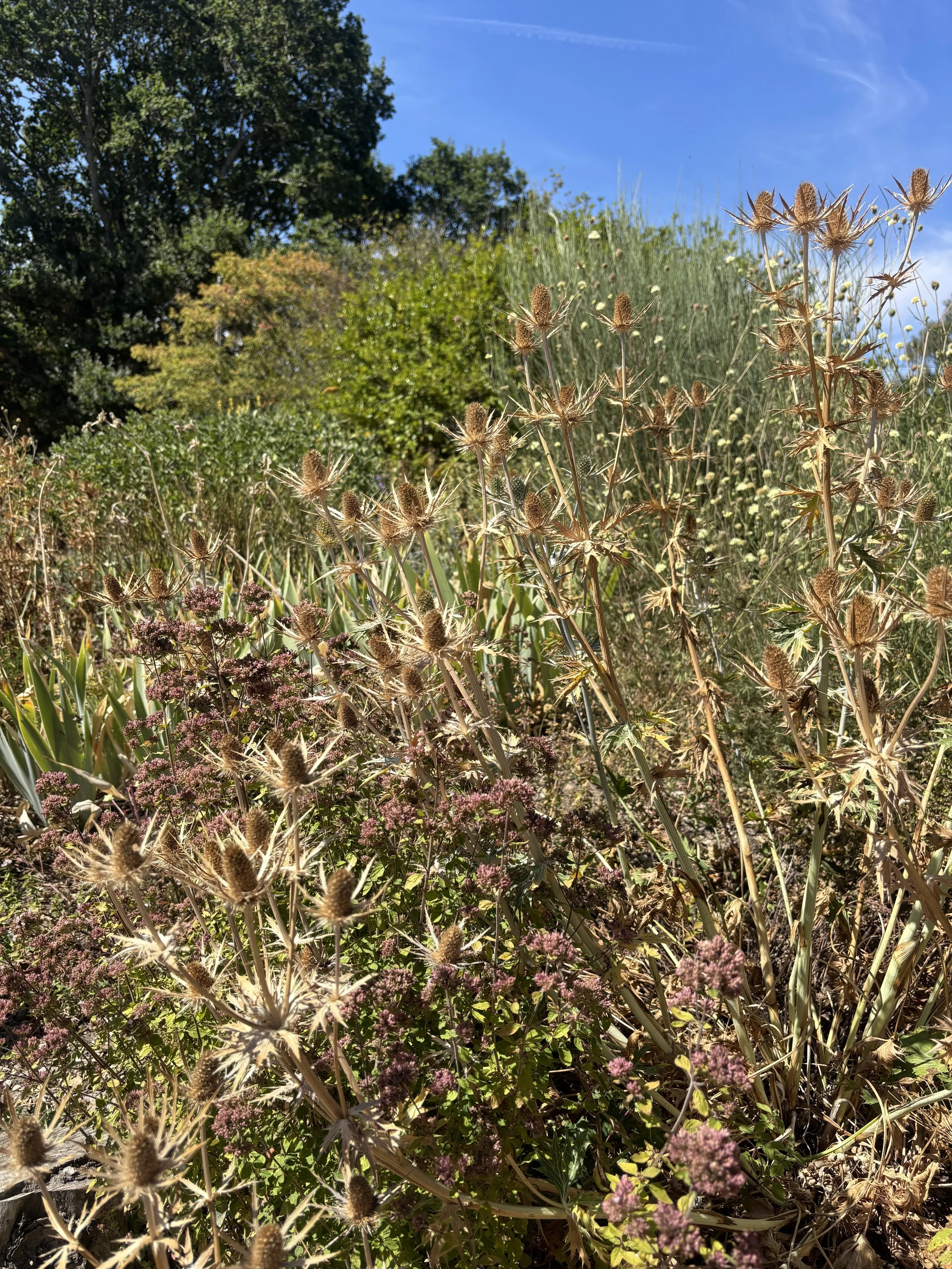
Architectural browns of Eryngium are easy to keep in the garden, other withered corpses less so
Although I like to leave seedheads and dry, hollow stems in place for wildlife in winter, too much weight of brown material in an August garden gives a gloomy sense of impending autumn. It’s always a delicate balance but this year I’ve tended towards leaving even less attractive shrivelled stems standing, particularly where they shade and protect the crowns of plants beneath. When I removed my hardy annuals in June, where possible I cut them back low and left them in place rather than disturbing and exposing the soil. In the veg garden, dense interplanting (like the classic combination of squash and climbing beans, or using salads between young cabbages) made a visible difference and I even left some spent crops and weeds in place to shade the soil.
2. Drought tolerance takes time
There has been a marked difference in the drought tolerance of the same plant planted two years ago, one year ago and moved this spring. Many drought-tolerant plants are deep rooted but until those roots establish, they cannot cope with a year like this. I have always tried to plant in autumn on my sandy soil, giving plants the benefit of autumn, winter and spring rain to get their roots out, but inevitably I am over ambitious, run out of time and put some jobs off until spring. I am realising that for me, here, spring planting is pretty much pointless. Whilst I might be able to keep a close eye on a handful of late additions each year, autumn planting is the way forwards. Sadly, I’m also realising that without a hosepipe I can only look after so much establishing garden each year. I’m scaling back my plans for expansion to manageable areas until plants establish and thinking hard about how much division and movement of plants is strictly necessary. I’ll try to edit delicately, resisting the temptation to shuffle everything about each autumn, leaving me with a higher percentage of resilient, mature plants in the garden.
3. Microclimate matters
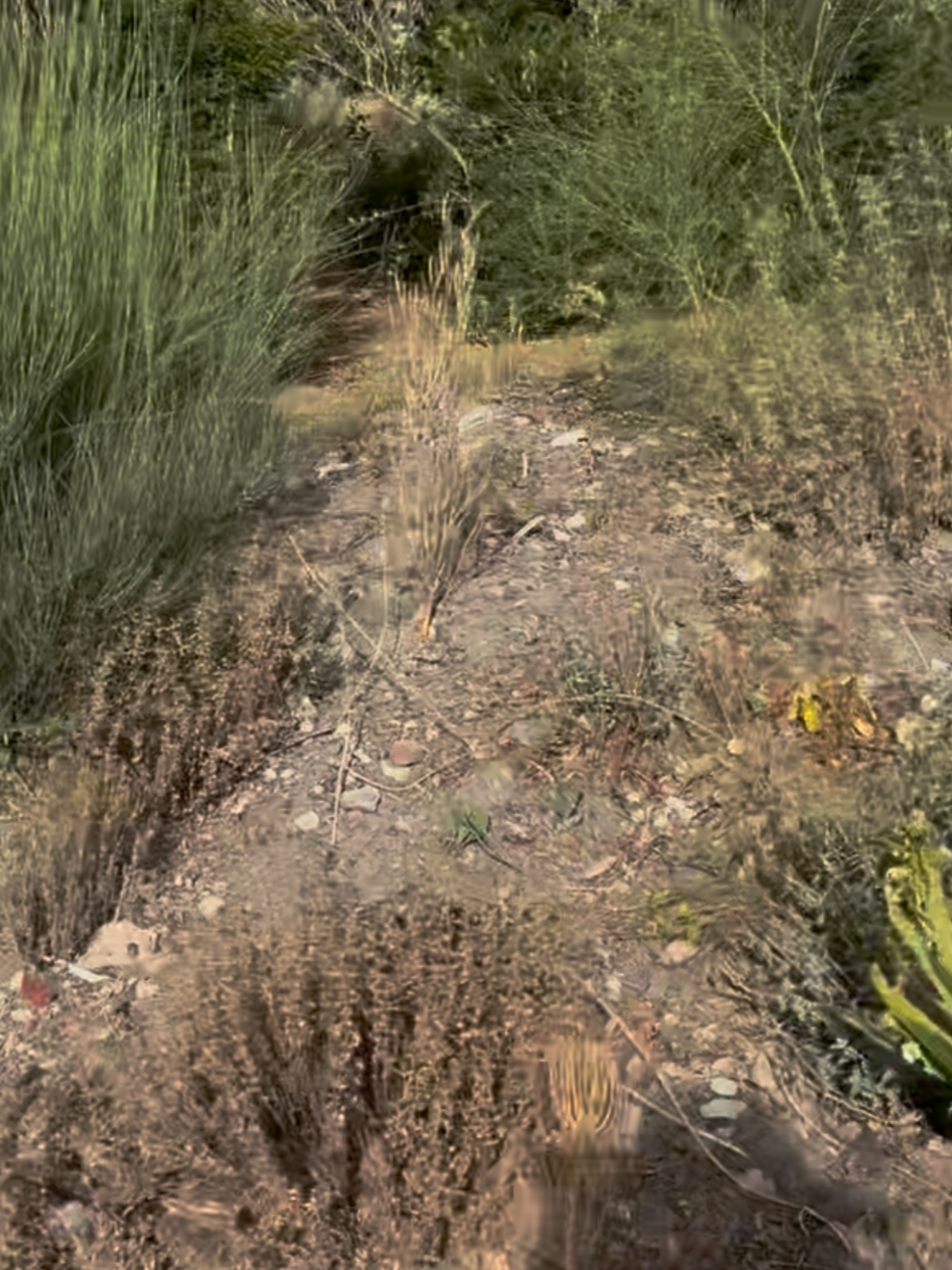
In particularly bleak, windswept corners, even very tough plants are struggling
Where I’ve repeated the same plant in different areas it’s immediately clear how much microclimate has impacted how plants have fared. Sun-loving plants with a few hours of shade each day have ended up benefitting from the break and doing a little better. Those blasted by hot summer winds have been fried to a crisp, the wind sucking away moisture as fast as they can pump it out until they finally give up. Of course, our windiest, driest, trickiest sites still need planting, but responding sensitively to the nuances of my own garden and ushering unbreakable plants into the hardest areas will hopefully make for a better picture next year. Where my dependable golden oregano has blackened I’m going to experiment with tougher options like the rampant Euphorbia cyparissias (which I may well come to regret). Beautiful as the oregano is in June, I’d rather keep it for more protected areas where it will still have some colour and structure by late summer.
4. Bulletproof plants
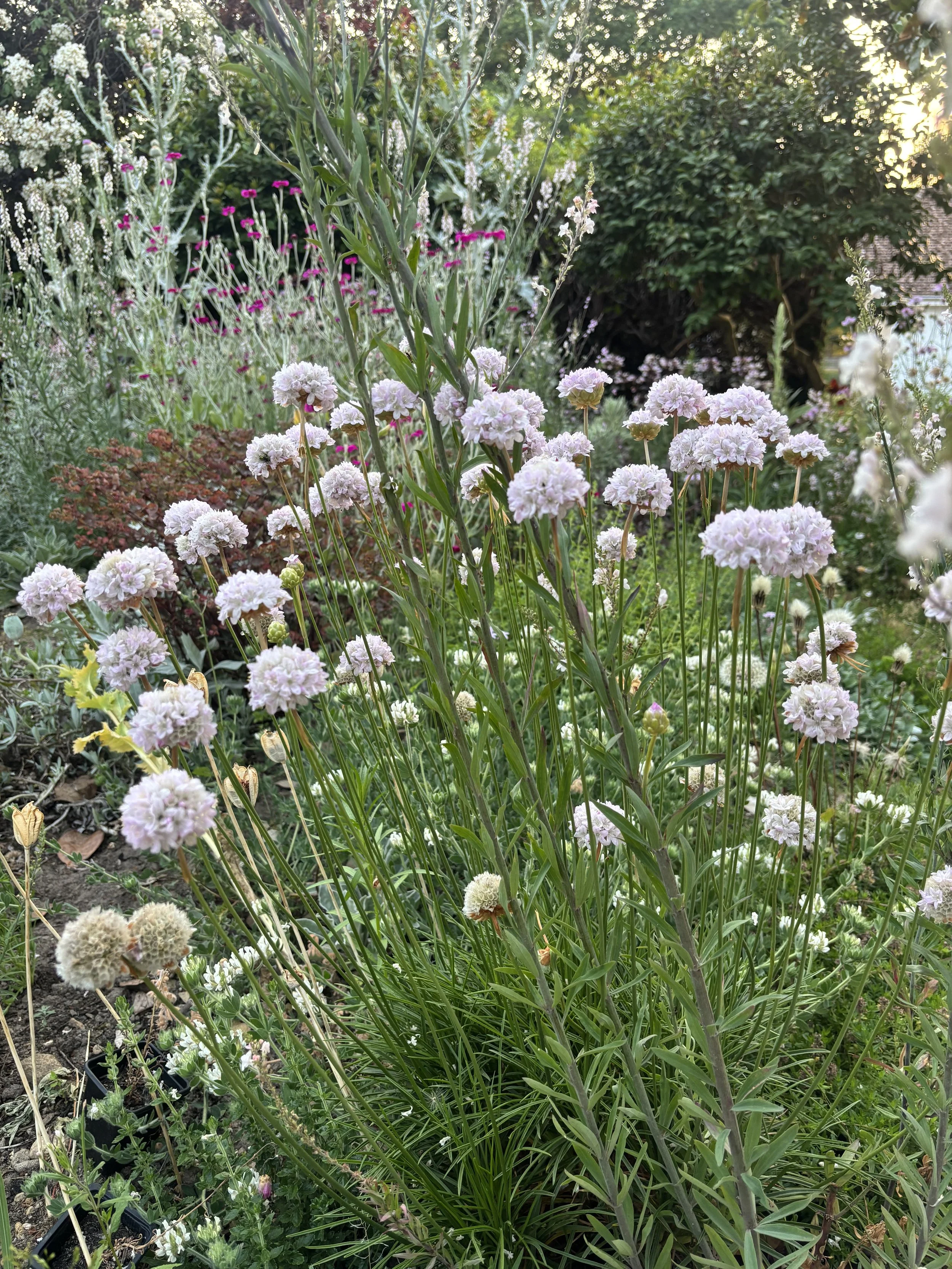
Armenia pungens in early summer
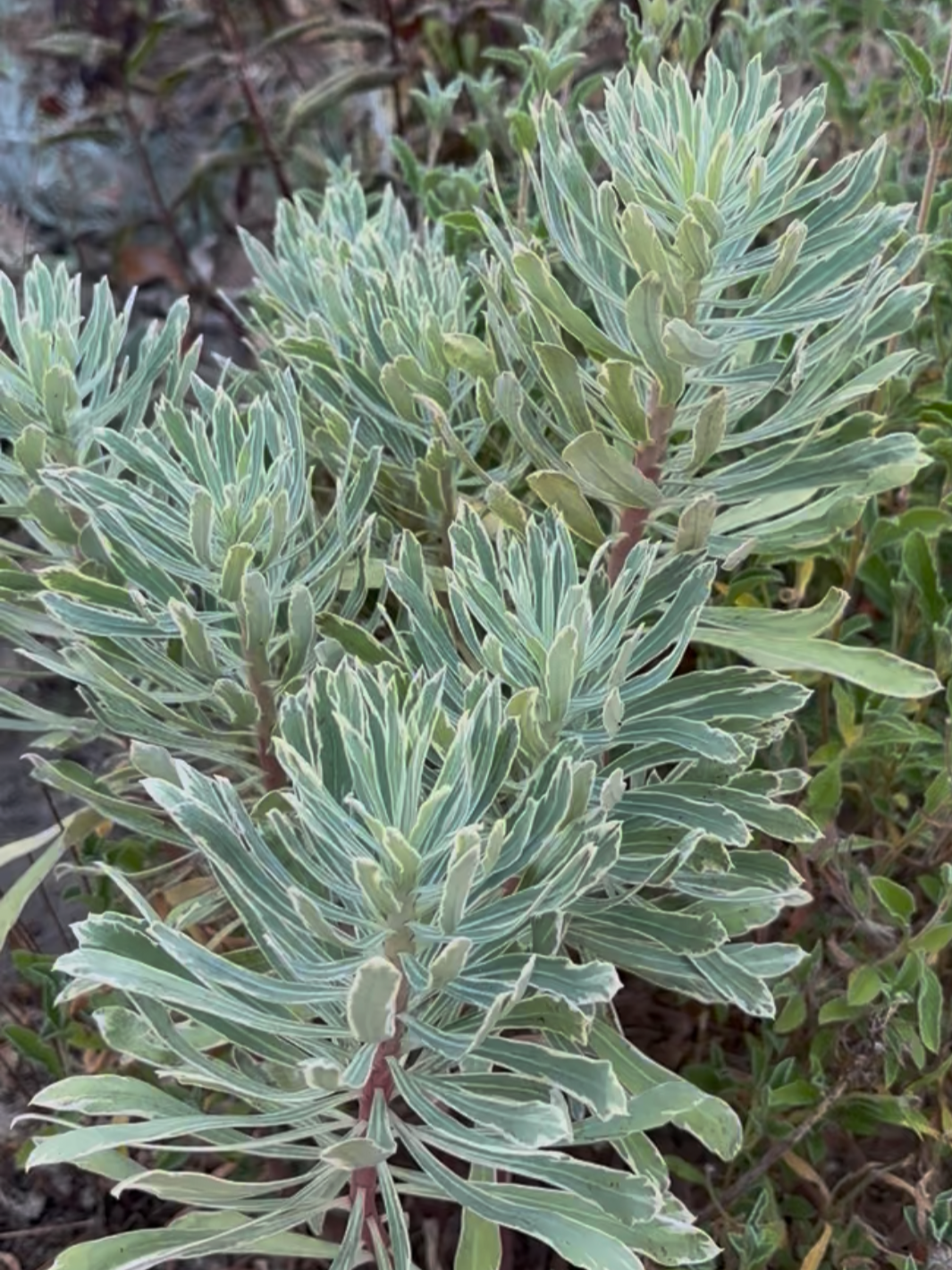
A young Euphorbia ‘Silver Swan’ this week looking fresh and elegant
I’ve taken careful note of which bullet proof plants have remained unscathed this summer. Both mature and recently planted Cotinus have thrived along with Myrtus communis, Cistus and even Deutzia where mature Viburnum have lost their leaves and Weigela are sagging. Evergreen Euphorbias have carried the garden beautifully. Euphorbia characias subsp. wulfennii is elegant on the front bank, various Euphorbia x martinii add bright, healthy foliage, E. myrsinites is mesmerising at the edge of beds, and good old E. amygdaloides var. robbiae is the only thing left plugging away in dry, dry shade. Big, established baptisia are doing beautifully along with santolina and helichrysum in full sun and wind. In my new silver beds, I’ve been thrilled with Allium ‘Summer Beauty’, silver Artemisia, Lotus hirsutus, various Teucrium and hyssop and the incredible Armeria pungens which mixes tufty foliage, straight out of Dr Seuss with elegant, delicate flowers. There have been surprises, like the resilience of some Symphiotrichum in full dry sun, as well as geraniums like ‘Mavis Simpson’ and ‘Dreamland’. Without the planting becoming monotonous I’m trying to weave more of these into the garden with my inevitable, experimental punts spread thinly between them.
5. Sometimes the old ways are the best ways
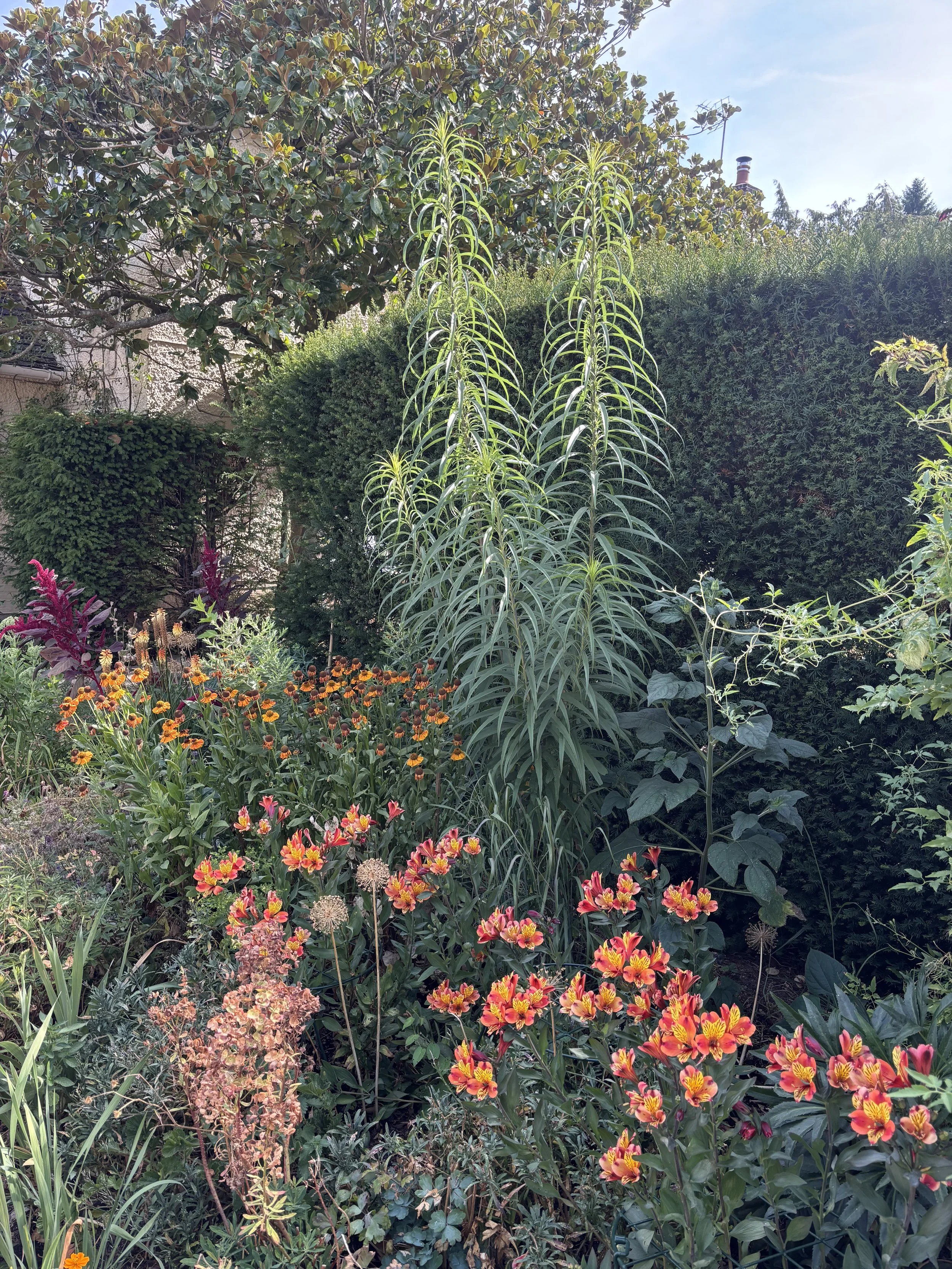
My only mulched border on August 2nd
Interestingly, the one bed I have heavily mulched for 3 years with mushroom compost has fared remarkably well this year. It was watered thoroughly once in July when I had filled it with dahlias and annuals, but beyond that it has required very little emergency water. Now, finally, it is visibly flagging but my asters are coming into bloom, Helenium ‘Sahin’s Early Flowerer’ has been a beauty, Salvia ‘Caradonna’ is still chugging away and my Helianthus ‘Lemon Queen’ hasn’t skipped a beat. Mulching with organic matter may not be a perfect solution but massively improves the soil’s water retention and winter drainage, whilst reducing evaporation in the heat. An old school solution but a good one, particularly for those taking on gardens with established herbaceous borders. It’s also important to note that plenty of plants have fared well that aren’t trendy, mediterranean introductions. Roses are the most obvious example, steadily performing in every garden I’ve visited. Most of my planting is ‘dry’ but I can’t pretend I haven’t hankered for the generous beauty of mixed borders in other gardens and clearly with careful plant choices, the rich, joyful aesthetic of that kind of gardening is still possible.
It's easy to feel despondent about the future of the world we live in and the impact of a changing climate on our landscape and wildlife. Humans are capable of doing much damage to the world (my stomach turned last week at reports of people starting wildfires on purpose), but we also have huge capacity for deep thought, learning and looking forwards. Although in many ways this has been a sad summer for gardeners, it has forced many previously disinterested garden owners to look out of their windows and engage with what they see. I can only hope this will draw people into a deeper awareness and appreciation of nature. Whilst we may come to mourn the end of an era of ‘English gardening’, perhaps it will encourage us to understand the nuances and needs of our gardens better, working closely with what we have, thinking creatively and adapting to the future.
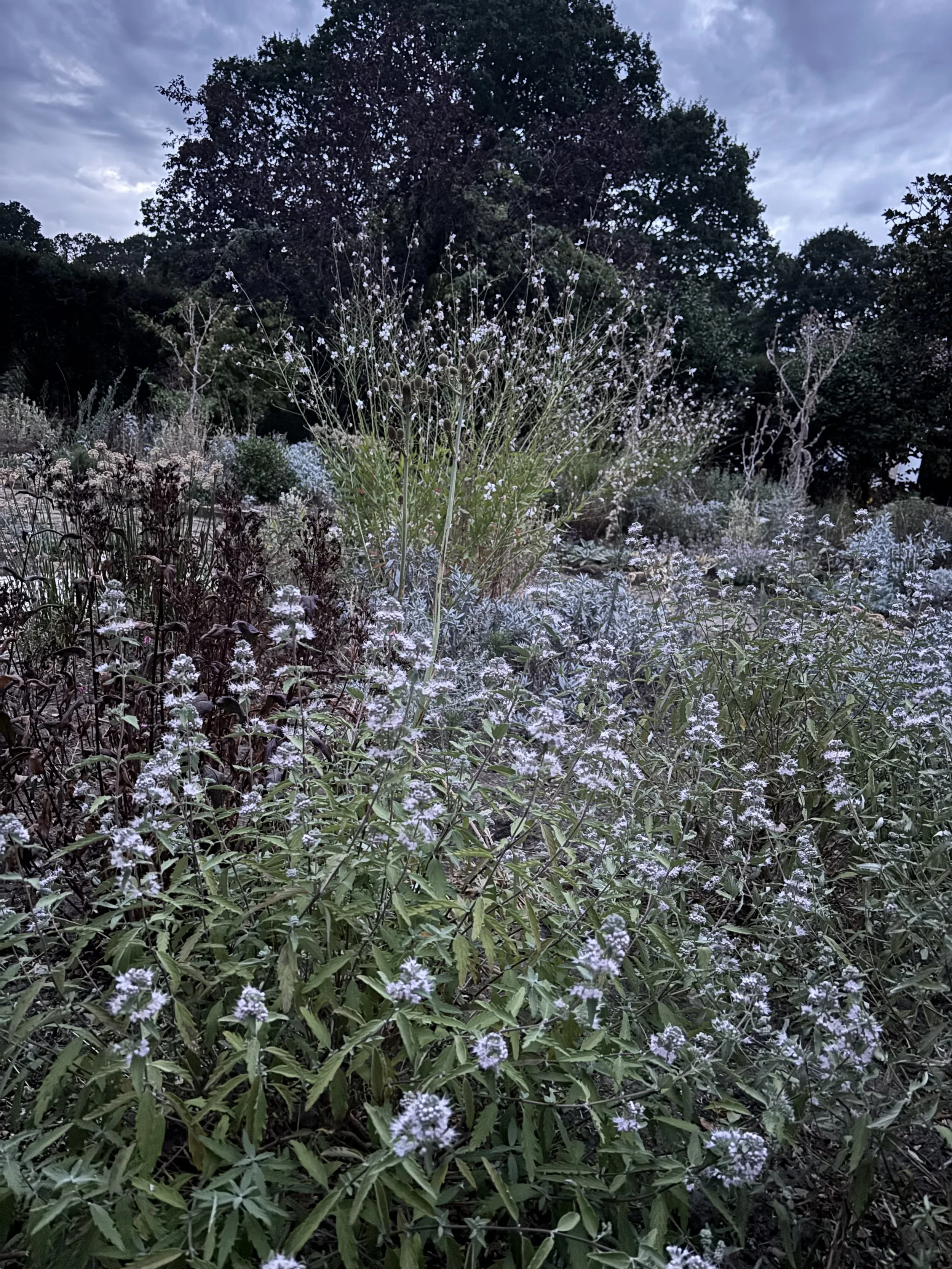
Tired but optimistic, my silver beds in the cool evening yesterday
