Chasing my Tail
Last week as I came in from the garden at 11pm, removed my head torch and wilted into bed, I had a terrible realisation. I have worked far, far harder on my garden this year than last, and yet in many ways I have achieved much less. Like some mad hamster in its wheel I have laboured frantically, feeling the earth move as I run, convinced I was making forward progress, whilst those around me have looked on bemused. What has changed? This year I have thrown myself into the heady, addictive endeavour of weaving annuals into the garden, trying to embellish the beds I have already created rather than conquering and pinning down new territory. Given that I am still in the early stages of making this garden (having moved here 3 years ago and gardened here for 2), it is perhaps not the wisest use of my time, but it’s a whole lot of fun.
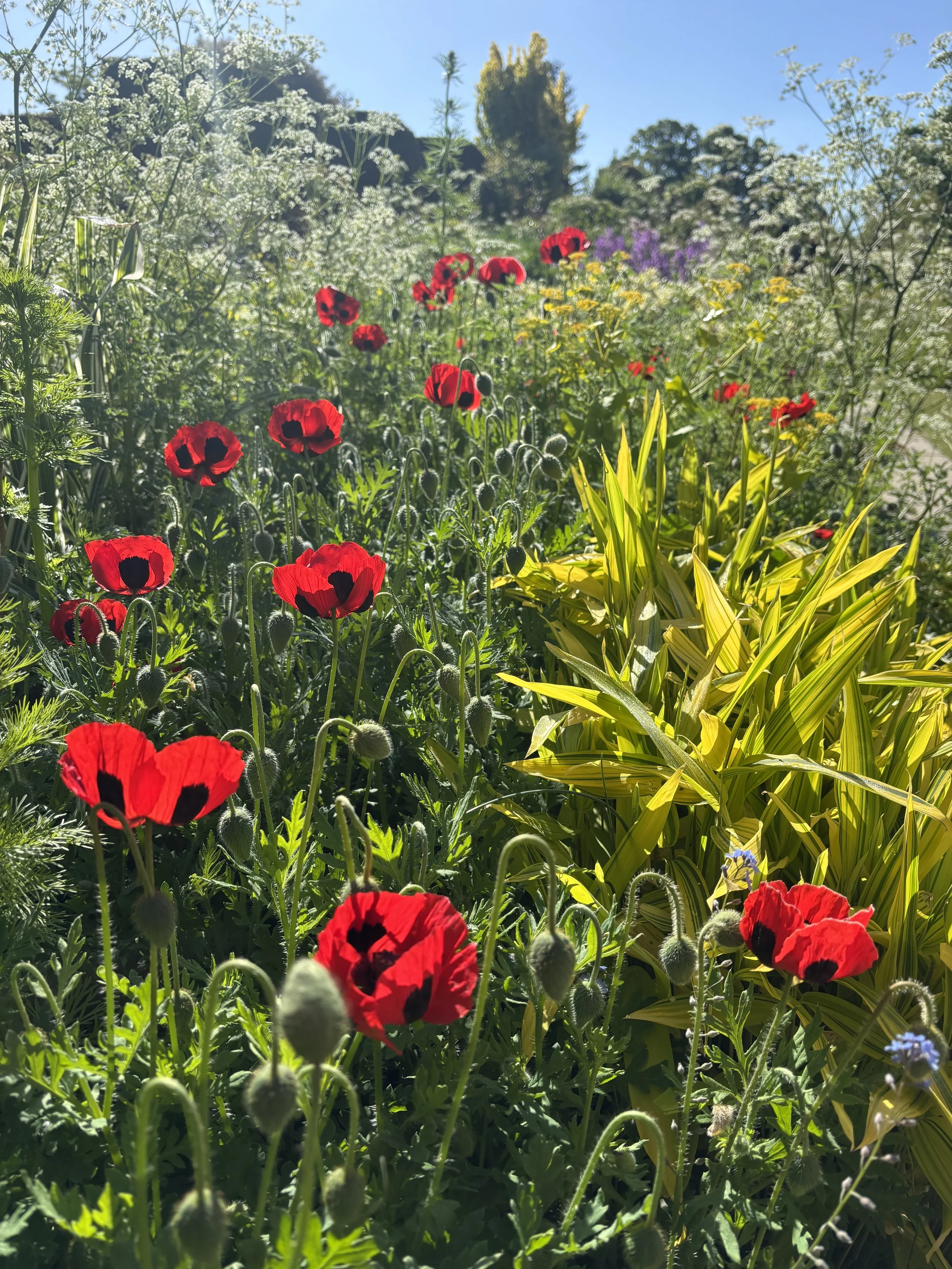
Lady bird poppies at Great Dixter
I’m in the middle of taking the Art and Craft of Gardening course at Great Dixter. It has provided much food for thought and expanded my understanding of what is possible in a highly managed garden, but there is also a tantalising, painful undercurrent to it. Having witnessed the exuberant psychedelia achieved by the gardeners at Great Dixter and other highly skilled gardens following a similar system, one can’t help feeling forever ruined for the ordinary. Having seen what can be done, it cannot be unseen, and it’s impossible to return home without wanting a small piece of that paradise.
My experiments with annuals this year have been a tale of two halves. Hardy annuals sown last autumn, overwintered and abundant in flower this summer and tender annuals sown this spring into summer theoretically for late summer and autumn interest, though how much interest remains to be seen.
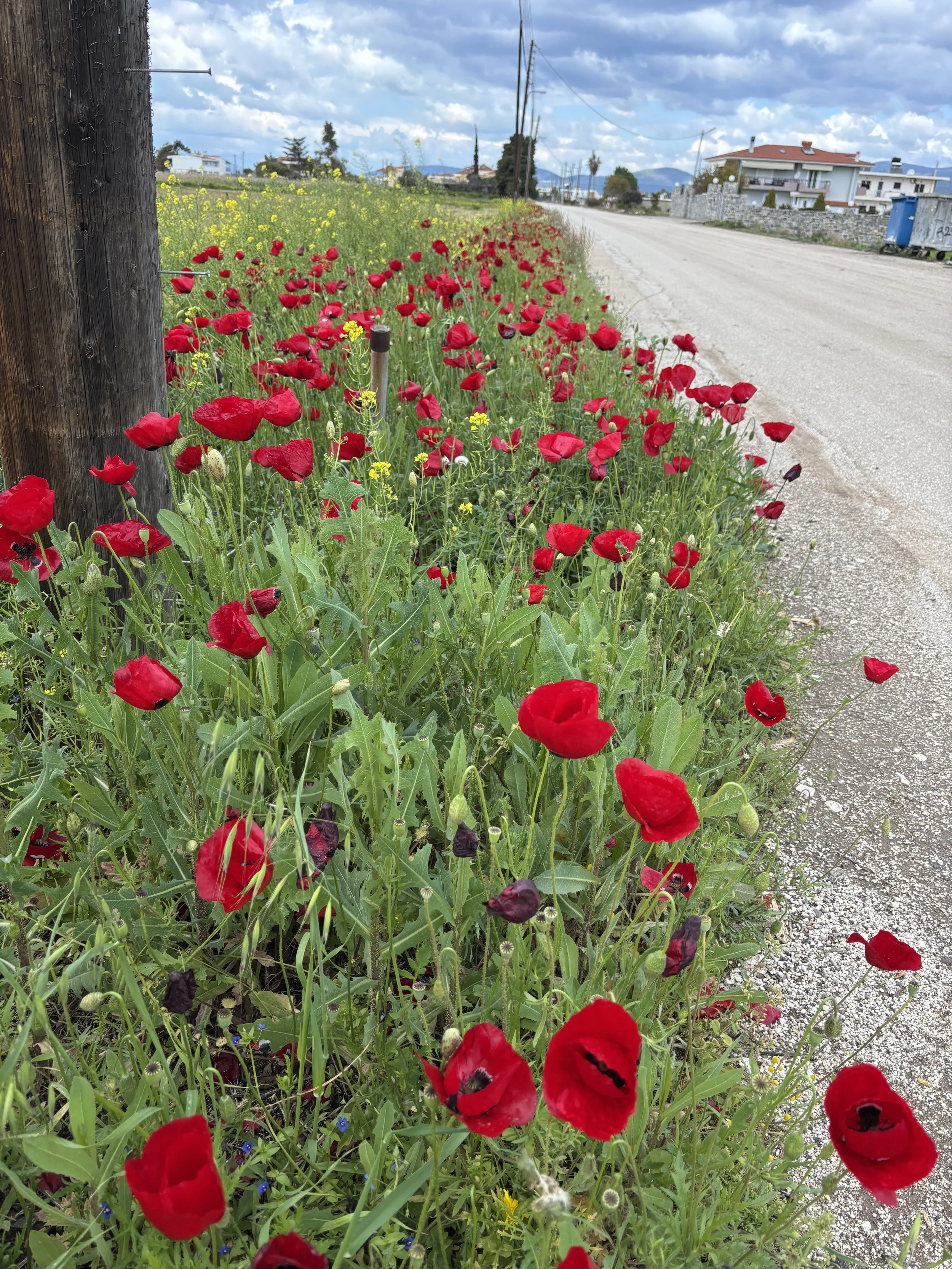
Wild poppies in Greece in April
Autumn sown hardy annuals have been a delight and have slotted into the rhythm of this garden with great ease. Much of my gardening here is with plants from the Mediterranean where hardy annuals (and biennials) are an important part of the floral landscape. Wildflowers like poppies, wild calendula, orlaya and nigella carpet the hillsides with kaleidoscopic colour in spring. As the summer heat arrives, they crisp and brown, shedding seeds which then germinate with the autumn rain, put on leafy growth through early spring to flower before the summer droughts hit. With the intense heat and drought we have experienced this year I can only think that this hardy annual system could be a natural fit for many home gardeners in the UK.
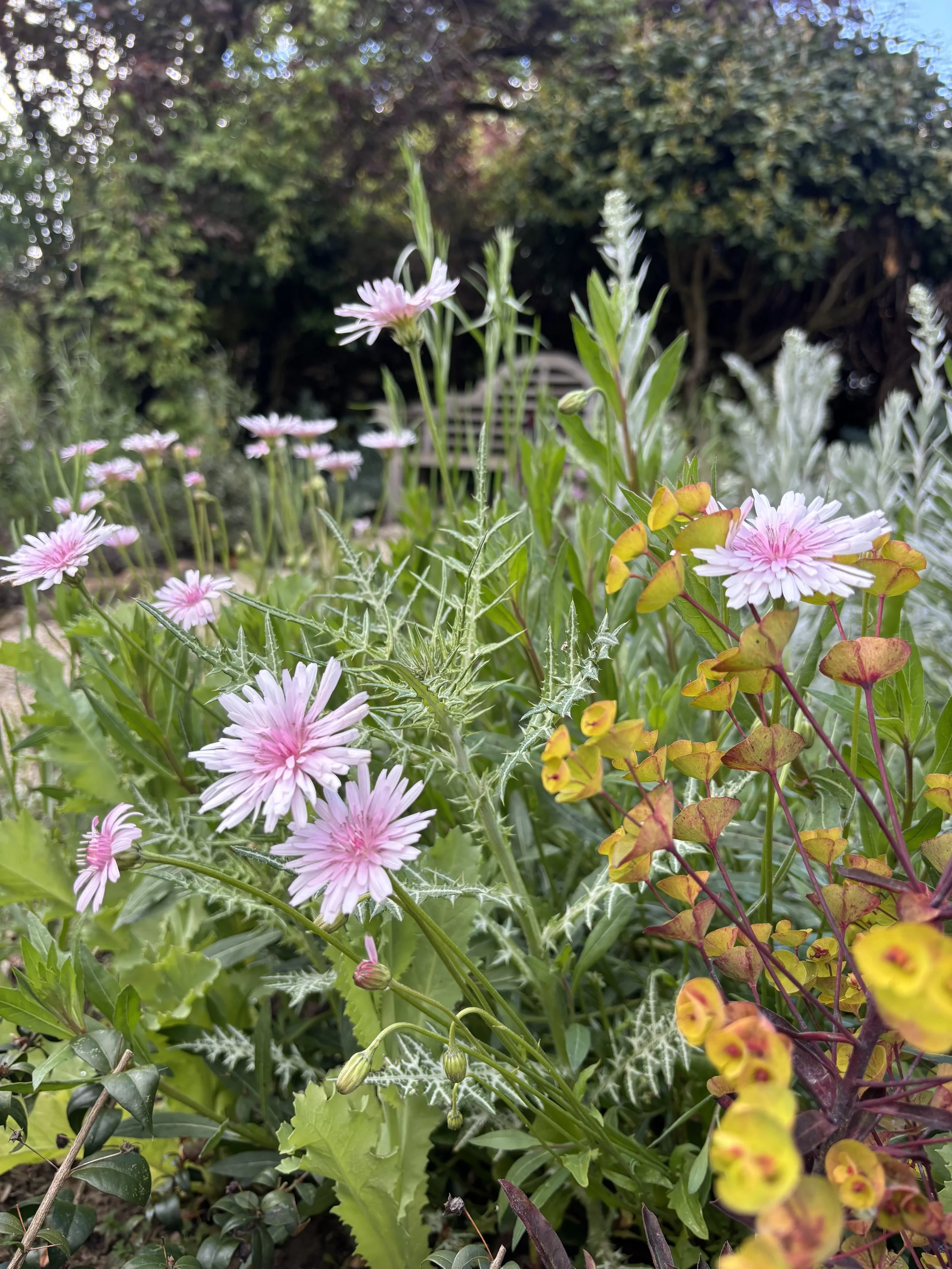
Crepis rubra in my garden this April
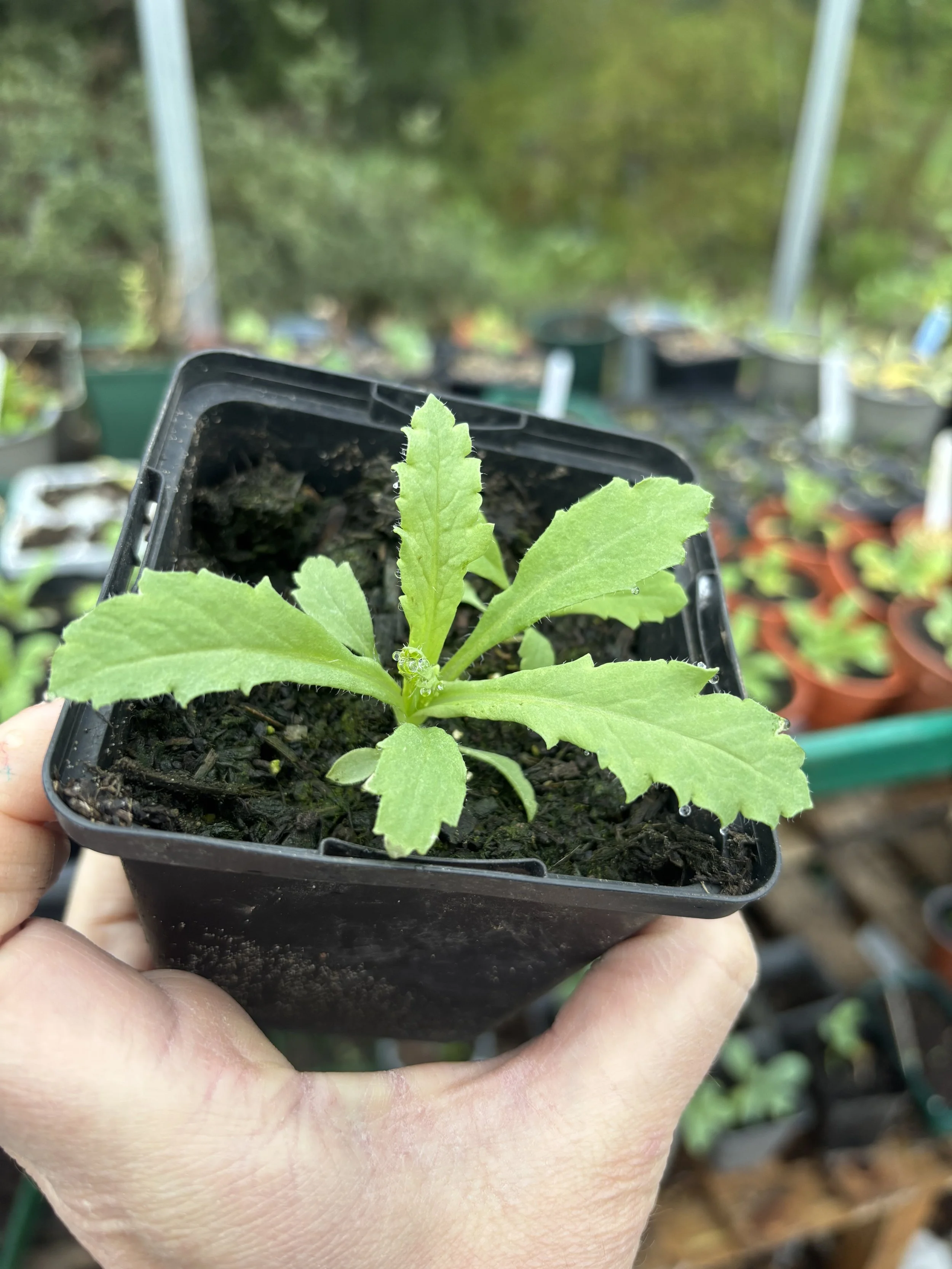
Papaver somniferous ready for planting out this February
Many of my hardy annuals are already self-seeding and overwintering here and I edit through seedlings of black cornflowers, Crepis rubra and nigella in spring.
You can also artificially recreate and significantly enhance this system by sowing into pots or trays in October/November, pricking out into 7 or 9cm pots at a very early stage and overwintering seedlings under the cover of a greenhouse or cold frame ready to plant out the following February/early March. This system is undeniably a fiddle and costly in compost but it gives plants a strong head start and protects the more delicate (like Cerinthe or Galactites tormentosa) from the frost and rain. It also means that all the poking around and planting out is done in late February when the borders are clear rather than hacking at the generosity of a September garden to make space to direct sow. Incidentally the packets of such seeds always insist on direct sowing – this system relies on pricking out things like opium poppies when they are improbably tiny, before their true leaves show. It works surprisingly well.
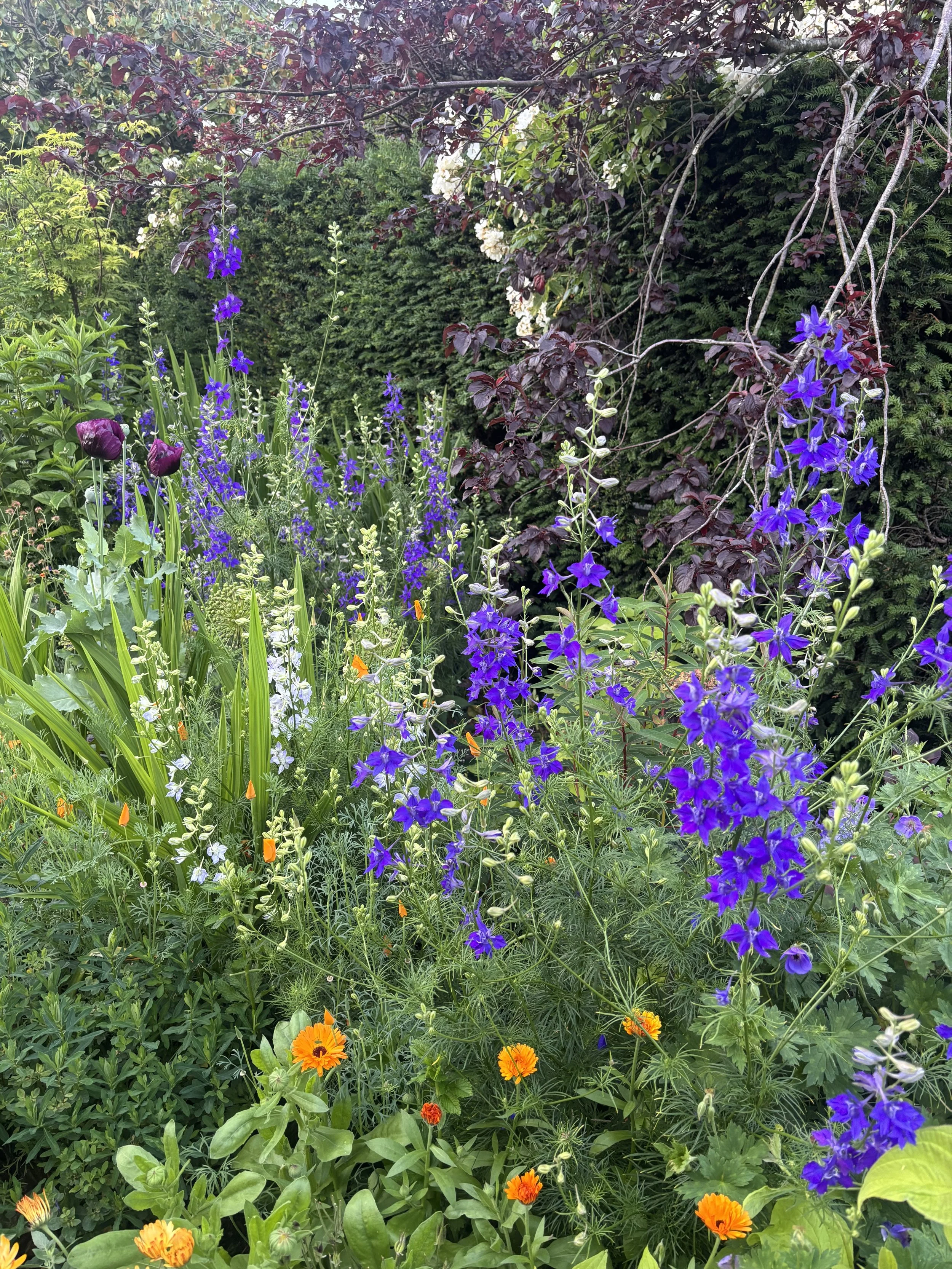
Autumn sown Larkspur in full bloom in June
Last autumn as I watched the garden around me crumple with the first frost, I sowed black opium poppies, Crepis rubra, cornflowers, larkspur and galactites. Once they were out in February they accelerated dramatically, slurping up the endless rain and growing fat before blooming in May and June. So far so glorious and I am looking forward to extending these experiments out into the other ‘dry’ areas of my garden.
The second wave of sowing (between May and June, even to early July) I planned to replace these and carry me through to autumn. I sowed an experimental batch of Cosmos ‘Picotee’ and scabious to fill large gaps in my new dry beds but made sure not to emotionally attach to them given their slim chances in such baked conditions. For moister beds close to the house and in the veg garden I sowed Cosmos ‘Rubenza’, Nicotiana langsdorfii, Emilia javanica, Tithonia, amaranth, Helianthus and Zinnias. I was over ambitious and at this point the gardening year began to tip for me into nightmare.
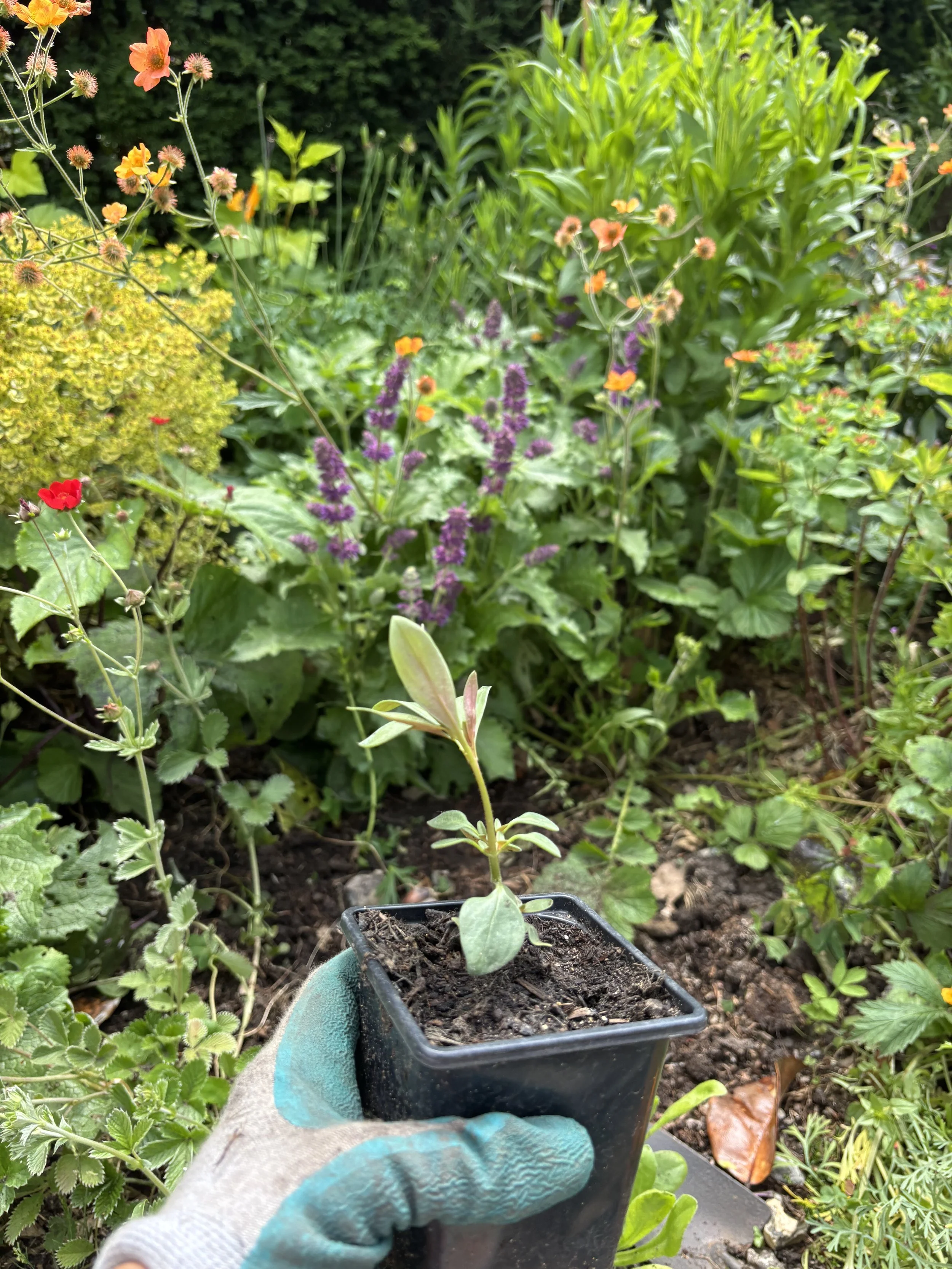
Dropping in the last of my late annuals mid late June
Sustaining seedlings in midsummer poses directly opposite problems to doing so in midwinter. In winter the risks are rot and botrytis, remedied easily enough by free draining compost (adding perlite or grit worked well) and a busy lifestyle to distract the gardener from enthusiastic over watering. Not too tricky. Managing hundreds of annual seedlings in the repeated heatwaves of this summer was almost impossible. The greenhouse became horribly hot and I spent hours shuffling my plants out into a temporary shady shack I cobbled together out of cardboard boxes and insulation panels. Many of the smaller pots needed watering morning and evening and so I found myself wasting what limited gardening time I have (I garden around my children and work so mornings and late nights), cossetting plants which were, retrospectively, destined to struggle anyway.
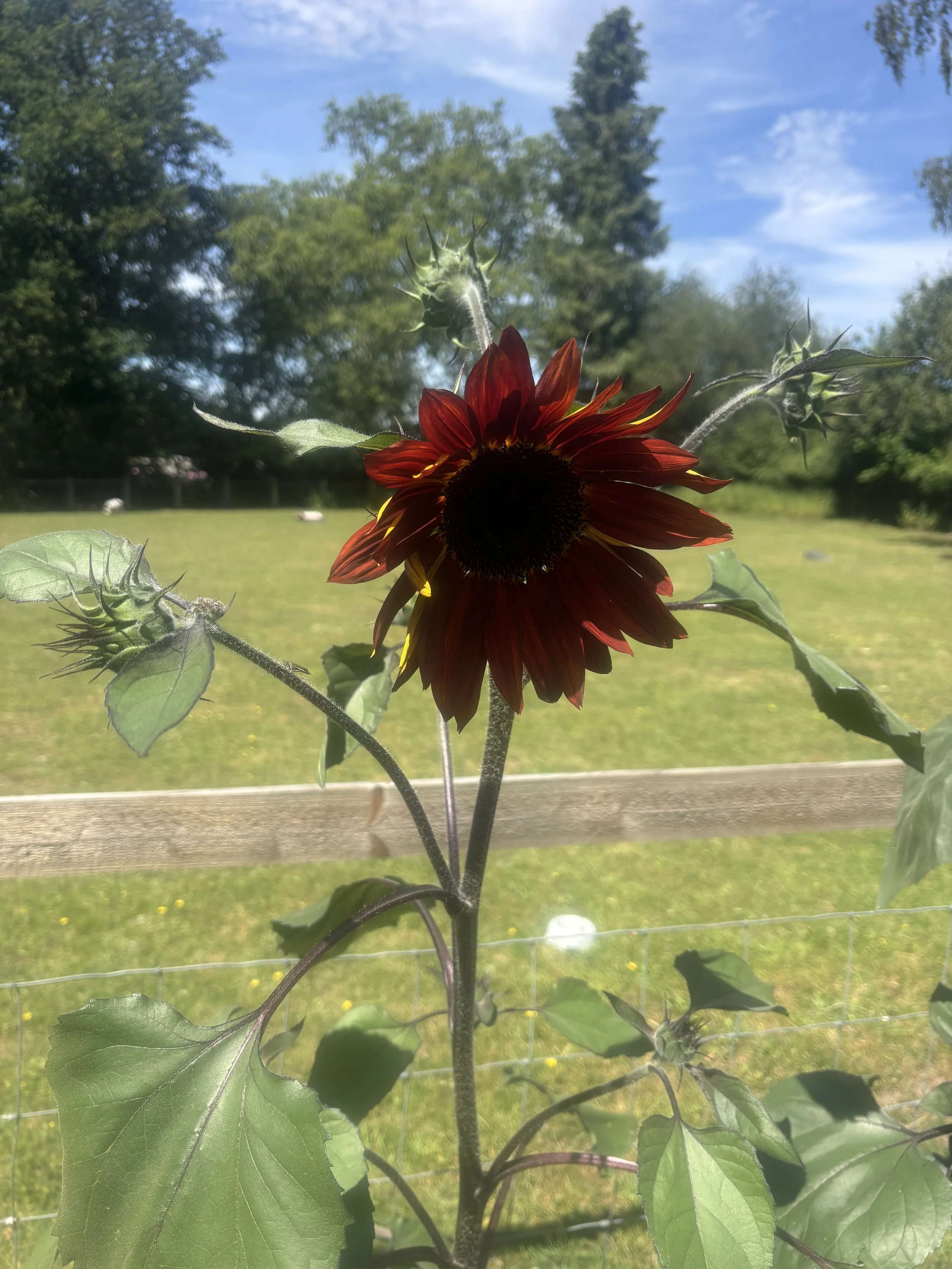
Sunflowers planted out in the rain are already in bloom
Rain finally arrived as a deluge and I frantically shoved cosmos, sunflowers and amaranth into beds whilst moisture would be available to them. Interestingly the annuals I planted in the one wet window this summer have grown very well and have required relatively little watering as mature plants, I assume because they have developed a big root systems. Later sowings I had to commit into baked ground as the summer holidays approached, and time began to run out. As the inevitable hosepipe ban loomed I focussed on planting in manageable areas close to the house (and tap), drawing a line under the remainder of my seedlings and emptying their little corpses onto the compost heap having worked so hard to keep them limping along. I don’t have the time or enthusiasm to be administering CPR to hundreds of unhappy annuals with a watering can whilst looking after three young kids in the heat of the holidays.
For now there is no sign of let up in the drought. From drizzly Scotland I have been checking the forecast as endless days of glorious sun roll on down south. A changing climate will inevitably shift the way we all garden and I wonder whether, for many of us, the practice of using late summer annuals (and dahlias for that matter) will be one of the things that has to modify. As we all face the effort of hand watering annuals, the extent to which we can use them will inevitably diminish. Although I have asked a few friends to pop in and water some of the very last seedlings I put in, I am uncertain what the results of my hard work will be come September.
Unlike the previous work I’ve done here, making beds and pinning them down with reliable drought tolerant evergreens, the cycle of annuals leaves me back where I started, full circle, sowing hardy annuals again for next year without ‘progressing’ as such. But regardless of the effort or the results, my experiments with annuals have given me one other surprising benefit this year. They have added a layer of creativity, flexibility and playfulness to my gardening that is otherwise slightly lacking in beds of permanent shrubs and gently rotating perennials. I love to propagate and create and struggle with dull winter and even duller high summer gardening jobs. Between successive waves of annuals and biennials I have found myself sowing, pricking out and potting on almost every month, nipping out to nurture seedlings in midwinter, planting them out in dreich February before turning back to the greenhouse to begin again. Always planning, experimenting and looking forwards. Despite the agony of managing them through a heatwave, annuals have kept my heart in an (almost) perpetual spring.
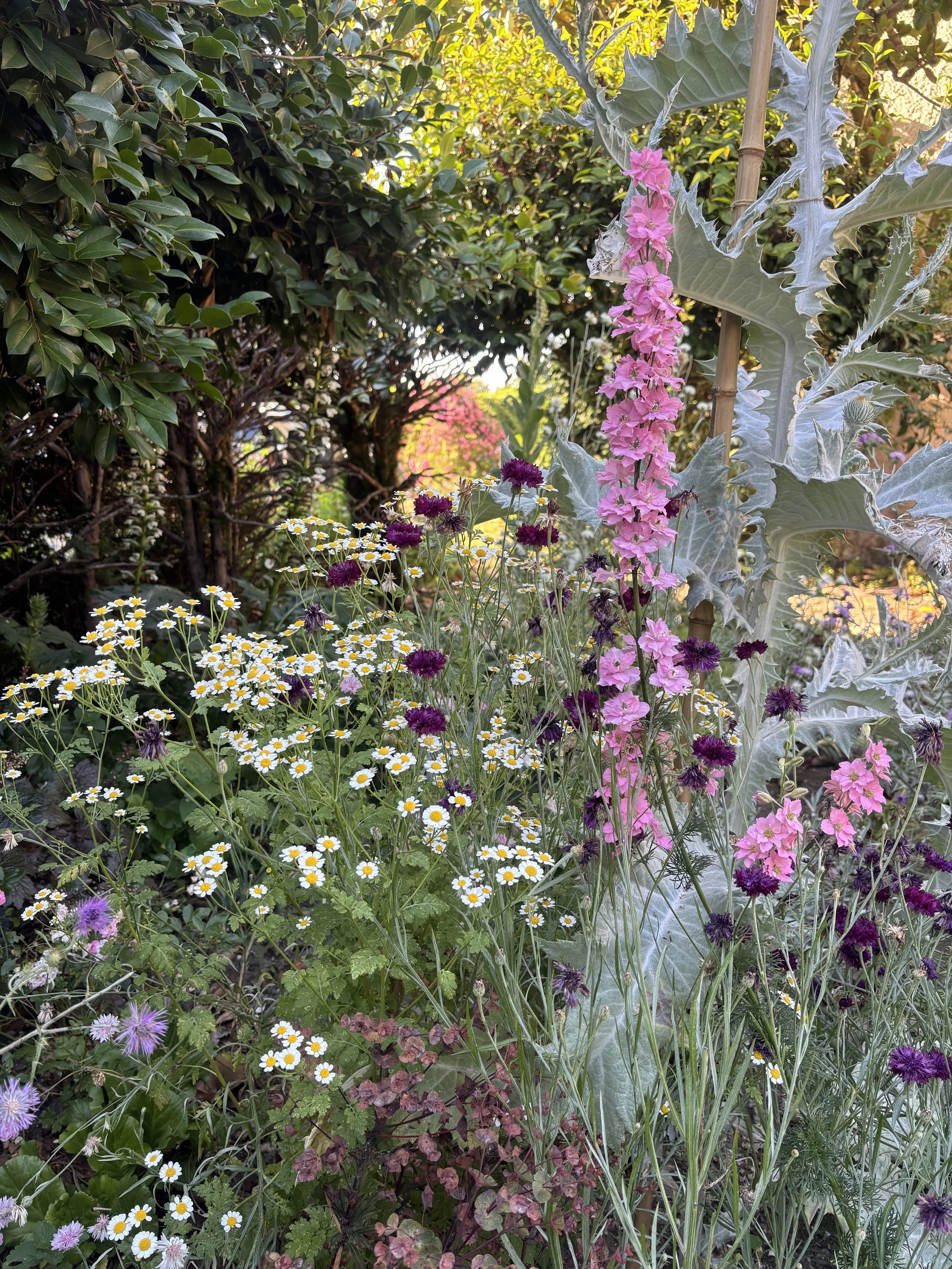
Larkspur, cornflowers and Galactites torments
