
Digging into toxoplasmosis
Advice for any pregnant gardeners
I am currently 34 weeks pregnant and gardening is getting complicated. I can garden standing up, or I can garden sitting down, but switching between the two regularly is now completely impossible. At Brockwell Park where I volunteer, I think the team are genuinely concerned I’m doing more damage than good to the garden as they see me lumbering into the middle of the borders, plants parting before me as before an elephant through the thicket.
Once you’re pregnant you are presented with a whole list of things you can’t do and mustn’t eat (coffee, alcohol, sushi, soft cheese). I was therefore thrilled when a friend recommended a brilliant book called ‘Expecting Better’ which debunks many of the myths around maternity and is incredibly permissive (perhaps why it’s so successful). Having read that I could drink the odd glass of wine and enjoy a coffee a day, I turned to pages about dangerous activities (hot tubs, flying, tattoos, cats) and on the last page I read:
‘The Bottom Line: Changing the cat litter is fine… but gardening is associated with an increased risk of toxoplasmosis. It should be avoided.’
I couldn’t believe it. At the time I was in my second trimester, sitting drinking a cup of tea with garden mud under my fingernails from a morning on the veg patch. I’d researched what I could and couldn’t do quite thoroughly, but no one had told me not to garden.
Toxoplasmosis is a disease caused by one of the world’s most common parasites, toxoplasma gondii which is found in infected meat, in cat faeces and, most frustratingly for gardeners, in the soil (thanks to the cats). For most adults, toxoplasmosis is completely harmless and symptomless. Unfortunately, whilst some risks are flagged in pregnancy to avoid discomfort to the mother rather than any risk to the baby (eg salmonella or lifting heavy bags), toxoplasmosis is not one of them. Catching it in pregnancy really is often disastrous, causing miscarriage and still birth, and for those babies that do survive, leading to ongoing complications, some of which only manifest themselves in a child’s teens. Reading about it as a pregnant gardener it is easy to get pretty scared.
Reassuringly, the transmission of toxoplasmosis is actually extremely rare and the most common way people catch it is through rare or cured meat. It can live in the soil for up to 18 months but would only get there if an infected animal had died there OR if an infected cat had defecated. Luckily, cats who are infected are only infectious for about 2-3 weeks, and most adult cats have already had it, so the chances are still fairly low. But because it poses such a huge problem if you do catch it, it is still definitely worth protecting yourself during pregnancy.
The first bit of good news is that once you’ve had it you’re immune for life and it is possible to be tested for it. In my first pregnancy, I wasn’t tested and didn’t even know you could be, but it turns out you can ask your midwife or GP to run a test for you if you garden a lot and you’re concerned. The test can tell you if you actively have it, but also if you have had it in the past and are now immune. If that result comes back, congratulations!! You can garden happily, safe in the comforting knowledge that cysts full of the little worms are snug and dormant, buried within your muscle and organs, protecting you for life.
I was convinced I had had it because:
I spent most of my time singing in France eating rare steak and vast quantities of salami
I have had cats and gardened since childhood
My London garden is a latrine for every cat in the neighbourhood
I never wore gardening gloves
I ate veg fresh from the garden
I was, therefore, a bit disappointed to discover that I haven’t had it, but I suppose that goes to show how rare it really is.
If you haven’t had it, gardening with good gloves and then washing your hands when you finish is the best thing you can do to protect yourself. Wash all your garden vegetables thoroughly (and shop-bought veg for the same reason). Some people suggest wearing a mask while gardening and perhaps in very dry weather if the soil is dusty that might be worth it…. I suspect in a British summer this isn’t really necessary.
So I am ploughing on through my last few weeks of pregnancy, and to be honest I can barely touch the ground anyway. I love gloves a lot of the time (e.g. slug collection) but there are moments where trying to protect myself from my own soil feels sad and disconnecting. Whilst other expectant mothers look forward to a martini, a rare steak and some opinionated cheese to follow, I am just looking forward to taking off my gardening gloves and putting my hands in the soil for the first time in 9 months.
Lockdown 2020 - Divide and Conquer
Getting hold of free plants while nurseries are closed
The week before ‘Lockdown 2020’ began, where other people were stocking up on loo paper I was filling my car with horse manure and wildly grabbing trays of summer bedding plants from the local nursery. And I wasn’t alone. I found myself queuing for the usually quiet car park and diving for the last pack of kale seeds, pipped to the post by a wild-eyed man in moccasins and a gilet. It was clear that all the good burghers of Wandsworth and Clapham were planning ahead for a summer of social isolation in the garden with a gin and tonic. Once garden centres closed down, online sellers were inundated with orders and many have either run out of stock or are suspending ordering as they struggle to fulfil a massive surge in demand whilst maintaining social distancing for staff. Those of us lucky enough to have gardens all suddenly have time to spend in them, but seemingly no way to get hold of plants to put in them. It’s still worth trying to find plants online as some suppliers are delivering, but given long delivery lag times there are other ways to fill up the garden and best of all they are pretty much free and hugely satisfying.
We can make a virtue of necessity and view this summer as a brilliant opportunity to revive the tradition of the cottage garden. Cottagers had very little space and no money, relying on the exchange of free plants to fill their gardens. There was a strong culture of passing on seedlings, cuttings and divisions to allow people to fill their gardens and expand their collections for free, with the added benefit that the plants that you grew would be tried and tested varieties that you knew flourished in the garden next door.
For beginner gardeners, the idea of dividing a plant might seem daunting, but it’s actually pretty easy, and arguably you will have better success with something that has been thriving in your neighbour’s garden than you will with a delicate plant from a garden centre. The plants we buy have often lead a pampered life of exotic celebrity. Forced into bloom early and dolled up to entice us, we knock them out of their pots without any effort to understand or get to know them. They find themselves plonked in the cold ground and promptly sulk at best or give up completely.
Dividing plants is also completely free. Planting only one of each plant in a garden looks pretty awful, but repeat planting (with the same plant throughout a border) is very expensive to achieve when each pot costs £9. Divide an existing clump and you can easily have 5 or so plants to fill a garden. The other great benefit of not spending a fortune on your plants is that a beginner can hack away like a mad scientist with the wild abandon that comes from knowing you have nothing lose. So, with hearts emboldened, I suggest we all go bravely into the garden and have a look for plants we can increase in this way.

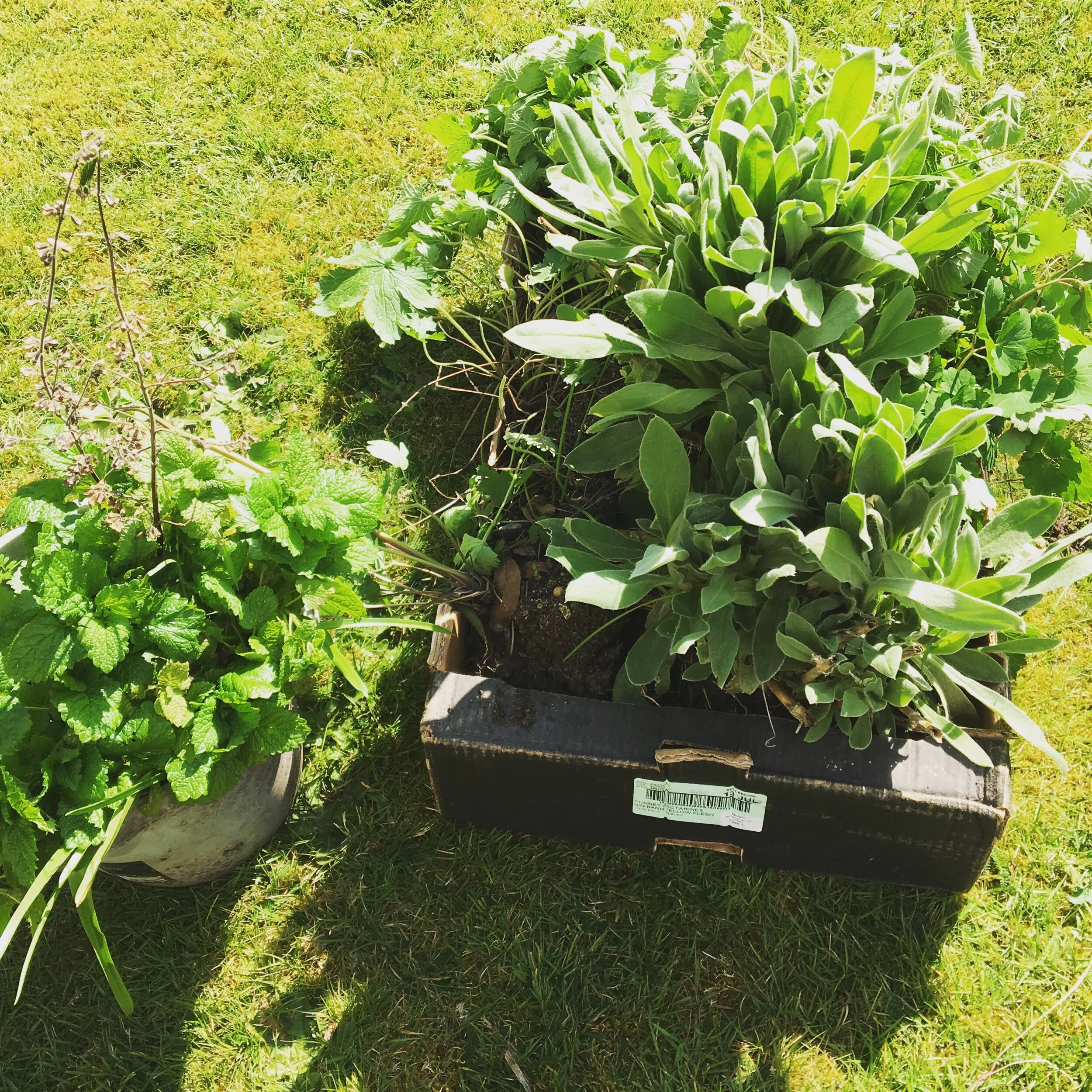
After half and hour of hacking
The first place to have a look is your own garden. More experienced gardeners will probably already have an idea of what is well established and ready to divide, but beginner gardeners may be pleasantly surprised. Remember that year you moved in, spent £200 on plants from the garden centre, had a fabulous looking garden for 3 months and then never touched it again? Hack your way through the weeds and you may just find them still there, 3 years bigger and just beginning to put on their spring growth.
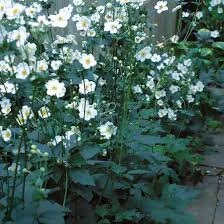
Anemone japonica often ends up spreading everywhere
The next place to look is over the fence. Friends and neighbours with well-established gardens will probably have big clumps of certain things that they are more than happy to give away. The Japanese anemone in the front garden that keeps on spreading. Too much Phlox. I should add at this point that you obviously need to follow social distancing rules doing this at the moment so let them dig plants up for you or ask them to mark your victims (a length of ribbon adds a sense of poetry and drama) before they watch through the window as you make your approach with a spade.
In general the plants you are looking for are herbaceous perennials (i.e. not a shrub, tree or a seedling) with a good crown (i.e. several vigorous shoots or a mass of green in a clump rather than one single stem). If in doubt, leave it until you know what it is this summer and then dig it up and divide it in the autumn. As a rule it always pays to err on the side of caution and have fewer divisions of a healthy size until you are confident in what you are up to.
There are 2 methods of dividing, both well documented online but here is a brief summary:
1. Sudden death with a spade
This is often the preferred method of experienced gardeners, especially with woodier crowns like a hosta. On a ‘how to’ video you see someone calmly place a sharpened spade effectively between the eyes of their trembling victim and then stamp, splitting the plant cleanly in two. I have been keenly practicing this technique for some time, but personally I struggle with it. For one, there seems to be an art to stamping with surgical precision and I haven’t mastered it. Also, I tend to panic just before the blade comes down and this has the disastrous effect of bluntly shaving much of the plant off. Don’t panic! It is almost impossible to end up with fewer plants than you started with. At worst, you end up with a slightly smaller plant and a richer understanding of the process for next time.
2. Butchery with a bread knife
My preferred method, this has the precision of the spade but you can take things at your own pace and stop halfway for a shot of Dutch courage. After you have dug up your plant, take a moment to have a look at the way it grows. If it is quite leafy or floppy it might help to give it a haircut so you can see what’s going on. If you feel about you will probably find a couple of obvious places where the plant falls into sections with a bit of bare soil between. At this point, either use your thumbs and fingers to gently tease the roots and crown apart or, if you meet with resistance, use the bread knife to cut through the roots and crown until you have two pieces. Repeat this where necessary and where obvious divisions present themselves.

Lychnis coronaria clump before divison…

… and after
Replant your divisions quickly when you have finished as they won’t like being left to dry out. Some plants with more top-growth will also benefit from a good haircut (to about 10cm) so that roots have time to establish without the pressure of sustaining foliage. This looks brutal and feels like you are adding insult to injury, but it will honestly do them good. Finally, give them a really good water which will wash soil back in around the roots and prevent them from drying out. With a following wind, many perennials will have a new lease of life from this treatment and set off into the year with renewed vigour.
At a point where we are forced to stay at home and public parks are threatening to close, those of us with gardens have never been so aware of the great privilege and luxury that they afford us. If we don’t get out into the garden now, when will we? The closure of garden centres is a real loss (and a great tragedy for the industry), but it is no excuse for staying indoors!